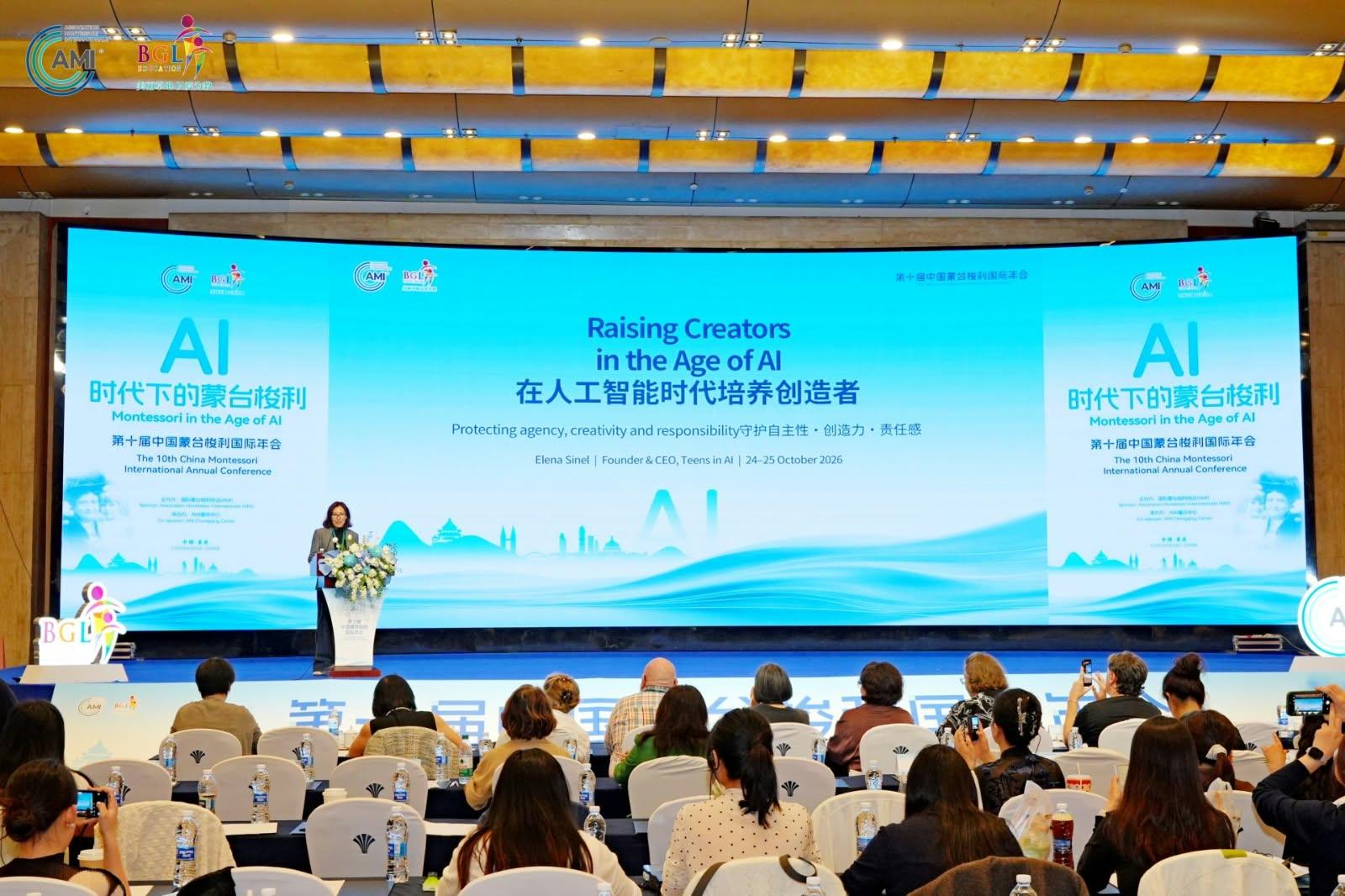
How Montessori principles can protect children's agency, creativity and responsibility as AI systems become part of everyday learning.
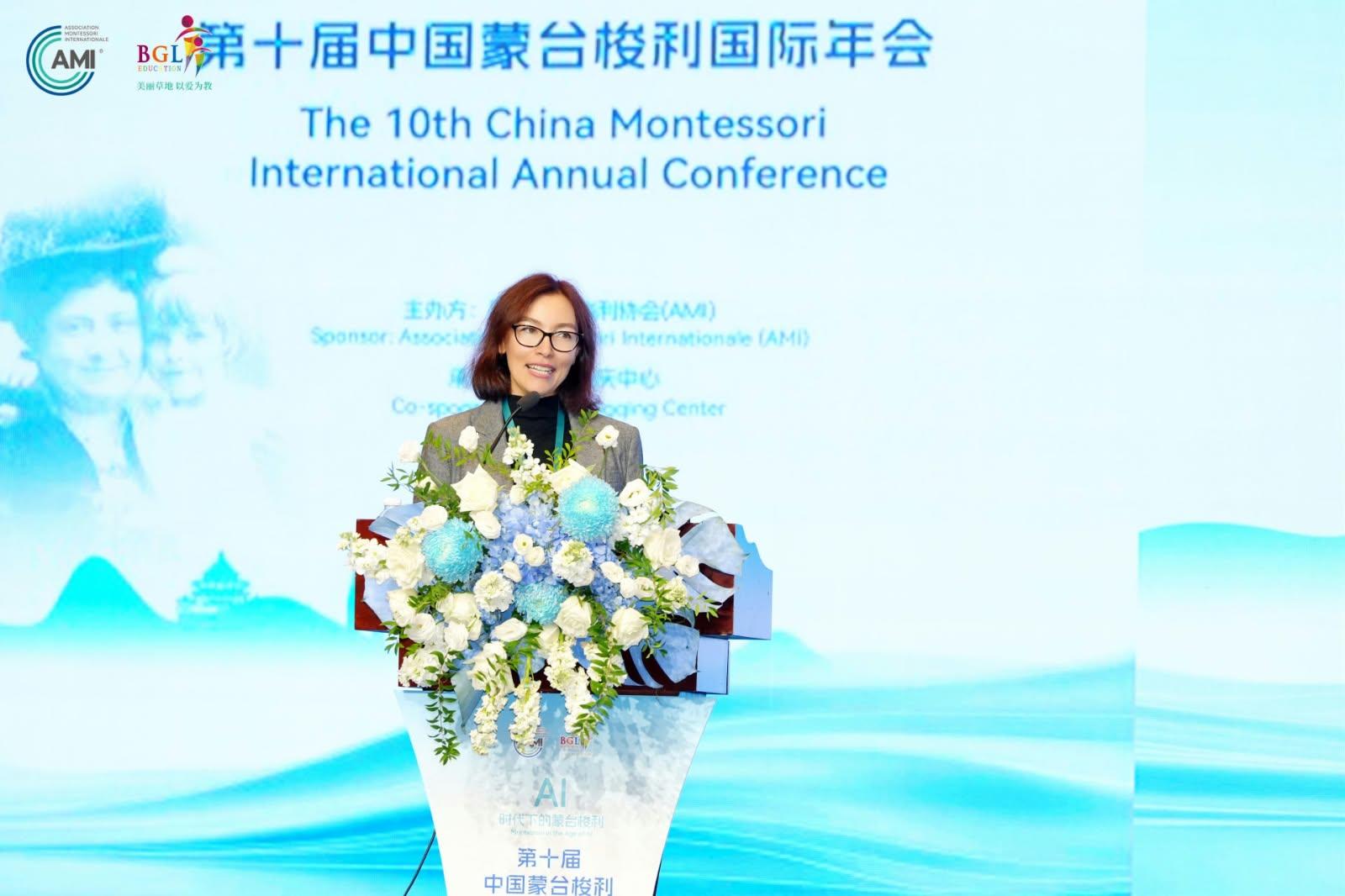
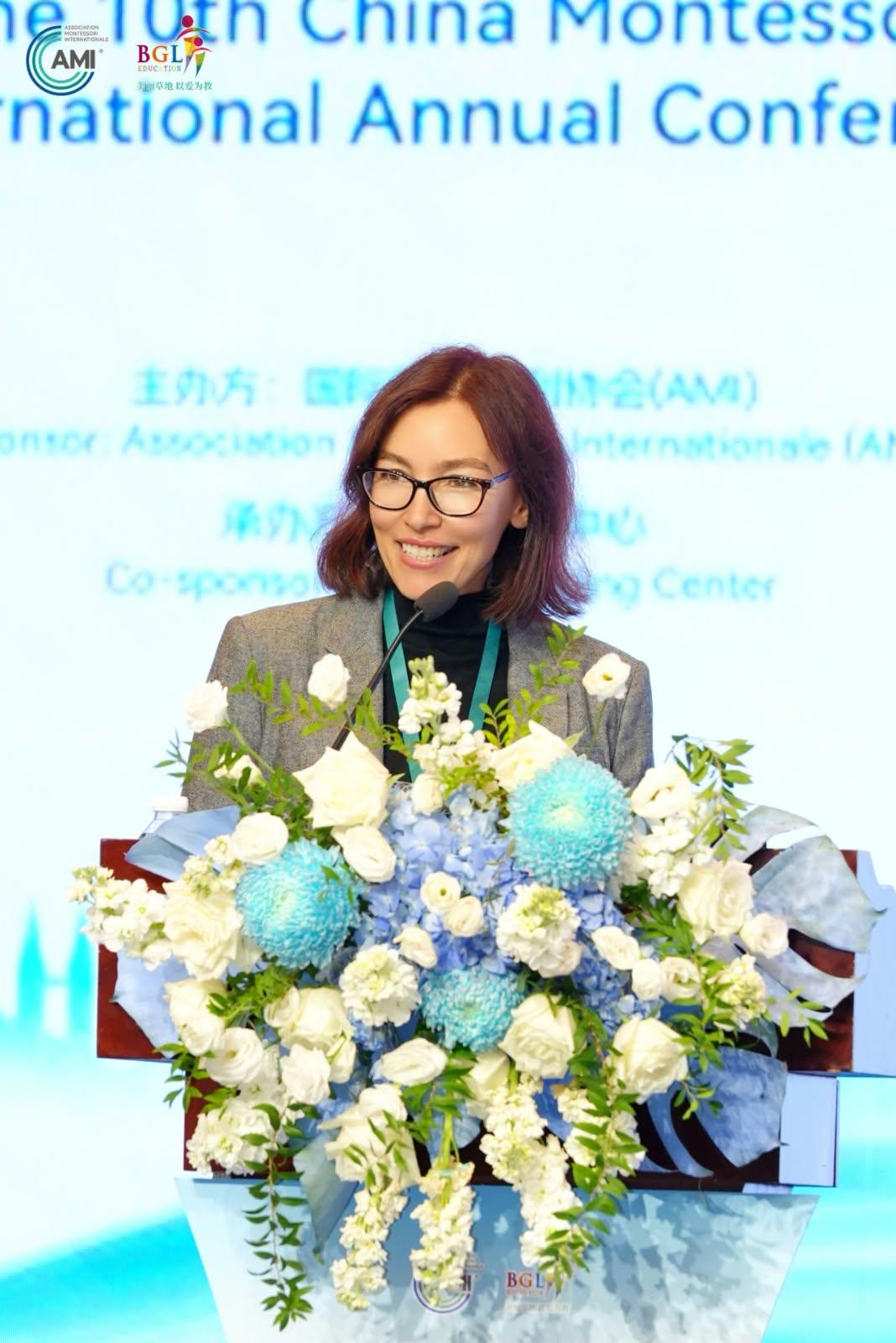
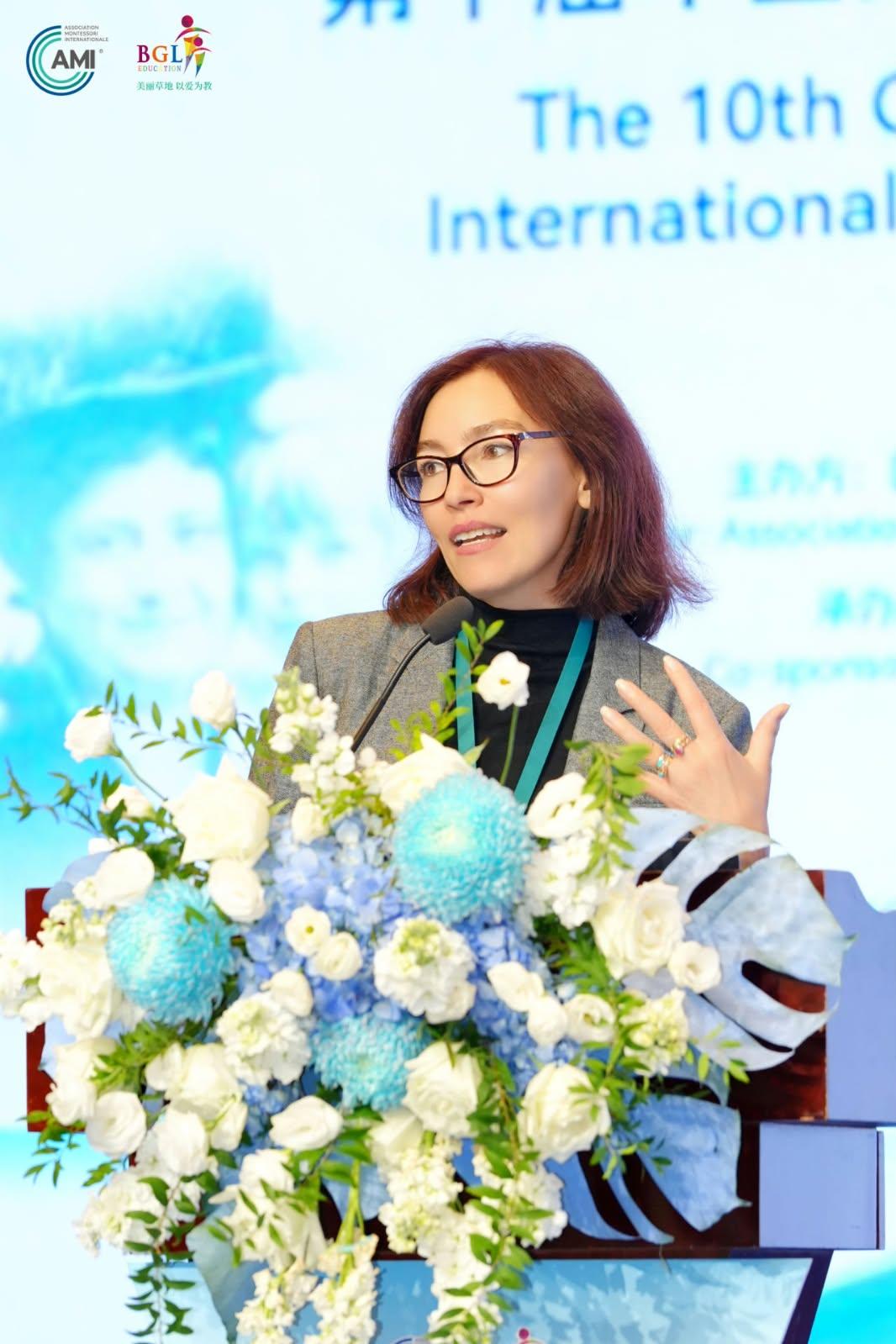
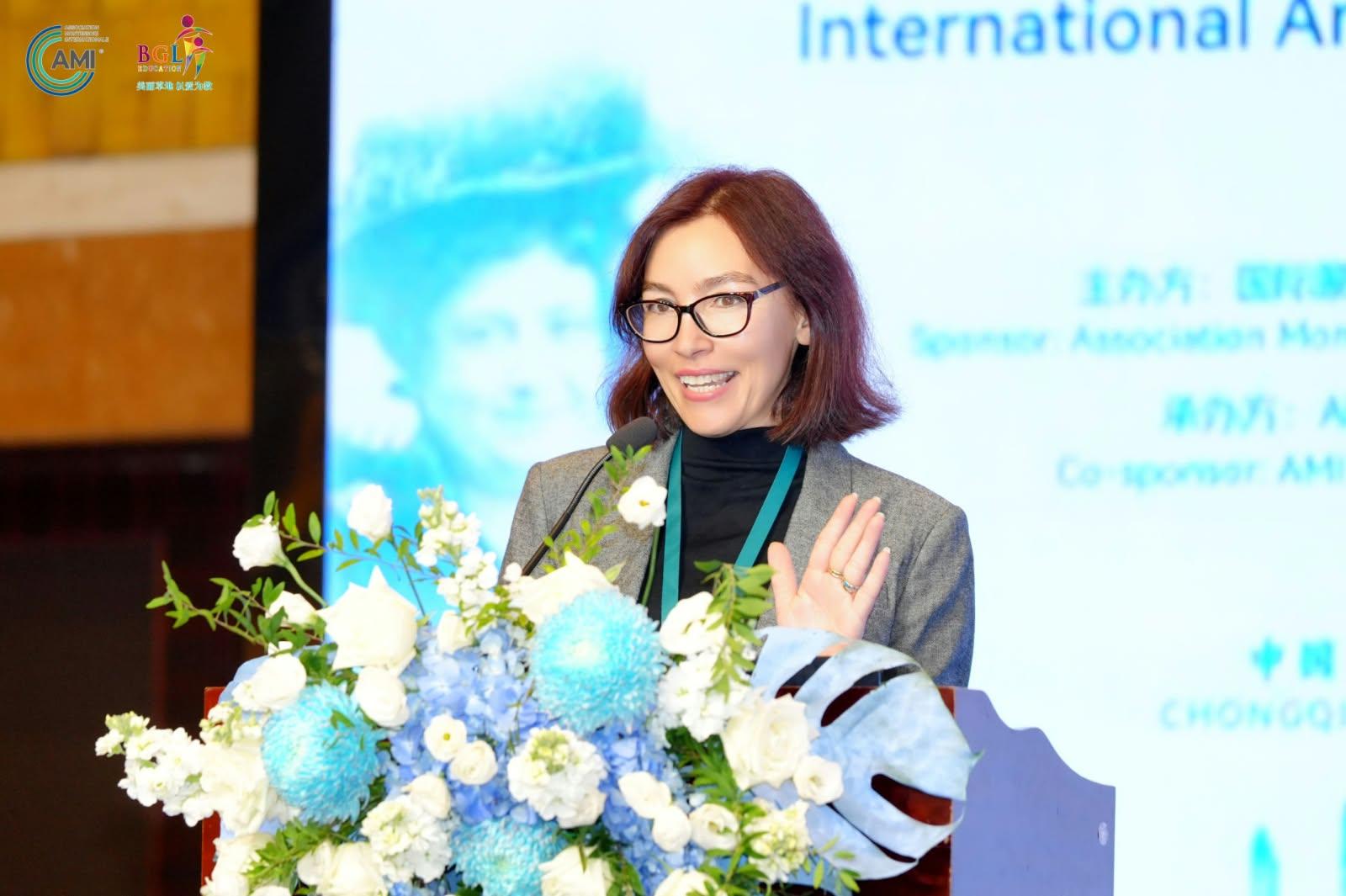
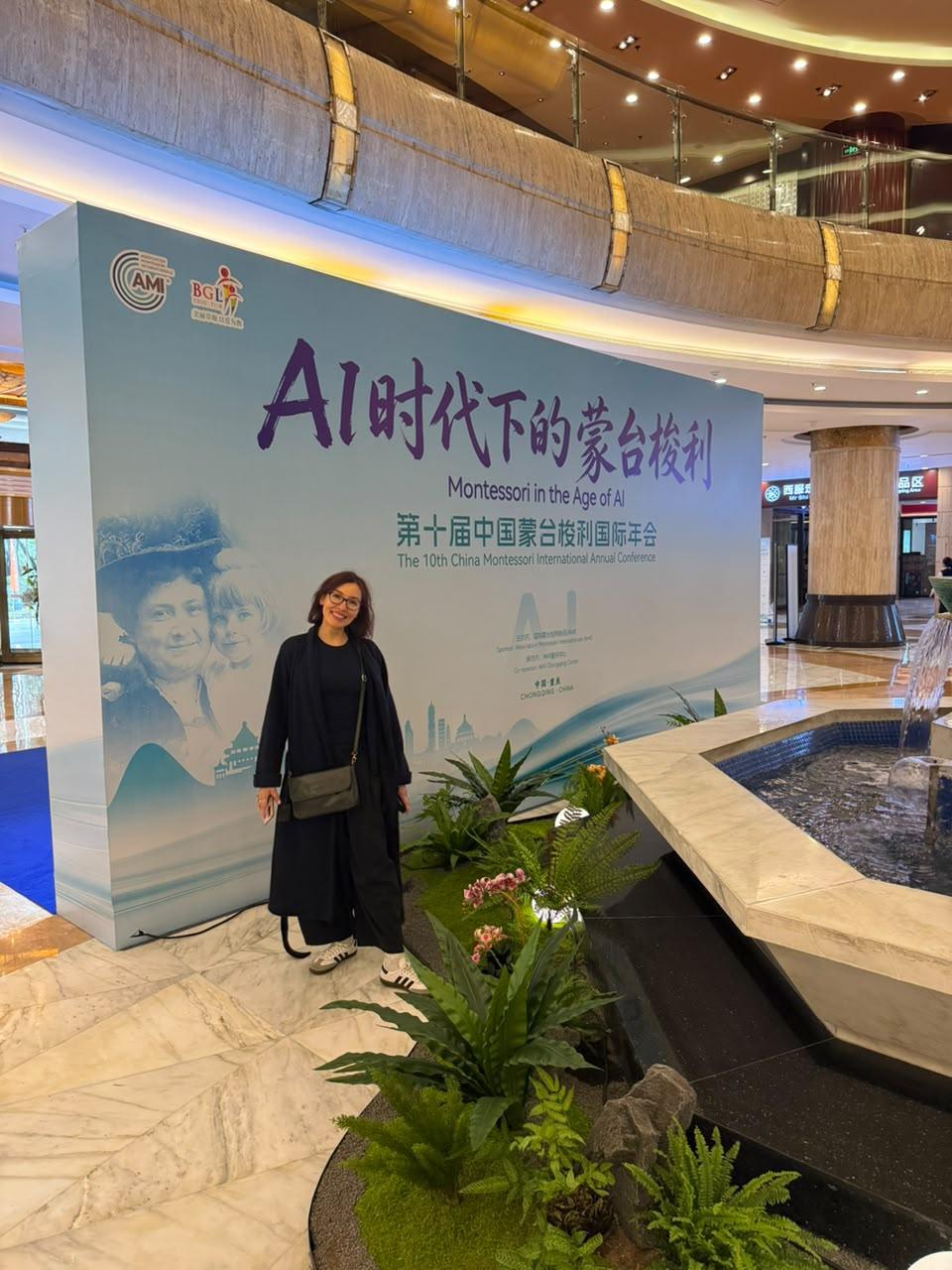
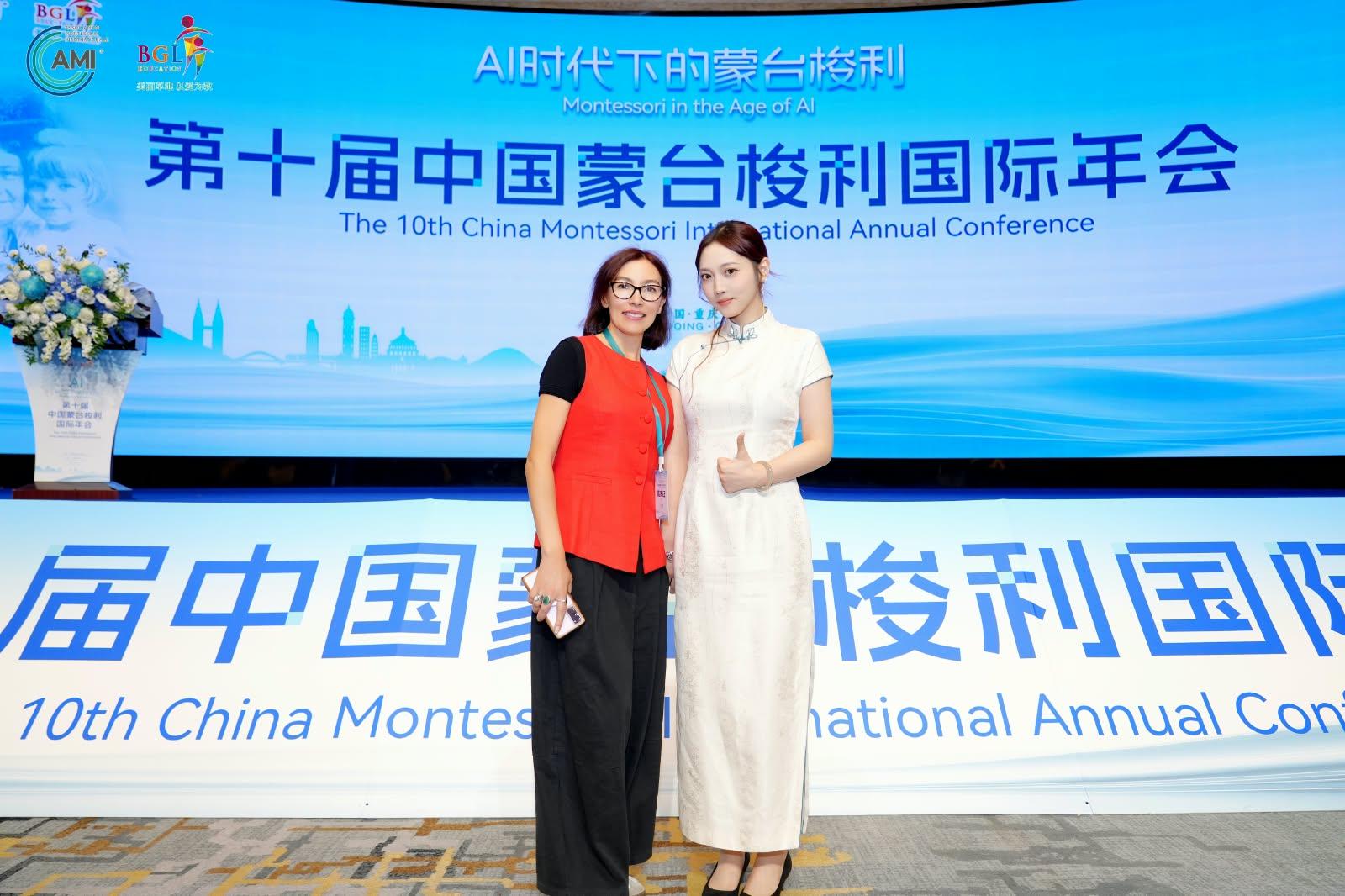
On 24 and 25 October I joined educators from across China and around the world in Chongqing for the 10th China Montessori International Annual Conference, sponsored by Association Montessori Internationale (AMI) under the theme "Montessori in the Age of AI". Teens in AI has published a short report on my keynote, and I want to set out the argument here in more depth.
The keynote was titled Raising Creators in the Age of AI: Protecting Agency, Creativity and Responsibility from Childhood to Adulthood. It started from a question every educator in that room now faces in some form. How do we let children benefit from AI systems while they are still building the independence and judgement those systems can so easily bypass?
A Montessori audience was the right place to ask it. Maria Montessori built an entire approach to education around the child doing the work: choosing, handling, repeating, correcting. That principle matters more now than at any point since she set it out.
Keeping the child doing the thinking
A correct answer is not evidence of learning. A child can hand in a flawless piece of work produced by an AI system and understand almost nothing about how it was made.
When an AI system is used to explore an idea, test a hypothesis or check understanding, it can extend what a learner is capable of. When it completes the task on the learner's behalf, it removes the very effort through which understanding forms.
The research points the same way. A recent NBER study of more than 6,000 middle-school pupils found gains when an AI tutor was paired with mastery learning, which required pupils to stay with a skill and work through their mistakes. Tutor CoPilot, developed at Stanford, used an AI system to support human tutors during live sessions, with the tutor still leading the learning. In both cases the benefit came from how the learning was designed around the tool. The educator still sets up the conditions in which thinking happens.
I made a related case in Children Are Not a Beta Test. Better output and better learning are different things, and education has to be designed for the second.
A developmental approach to AI education
Montessori education is organised around developmental stages, and that structure offers a clear way to decide when and how children should meet AI systems.
Younger children need the real world first. Their understanding is built through their hands and senses: pouring, sorting, building, getting things wrong and trying again. No AI tool can substitute for that foundation, and none should be asked to.
Older children are ready to start working with AI systems critically. That means learning to notice what a system produces, to question it, to test their own ideas against it and to verify its output before they trust it.
Adolescents need to go further, into the wider questions these systems raise: relationships and companionship, identity, deepfakes, surveillance, power and bias. These are questions about the society they are growing into, and teenagers are more than capable of engaging with them seriously.
From consumers to creators
Too many young people experience AI systems only as consumers. At Teens in AI, our aim has always been to move them from using technology to shaping it.
At our 2024 International Women's Day Techathon, the winning team, from Ukraine, designed a solution to reduce communication barriers for people with hearing impairments. They started with a real problem affecting real people and built from there. That is the disposition I want every education system to cultivate: young people who see a problem, ask whether technology can help, and take responsibility for what they build.
Creativity and responsibility develop together. A child who has made something understands, in a way no lecture can teach, that every system reflects choices made by the people who designed it.
Five questions for educators
I closed the keynote with five questions I would ask any educator, school leader or parent to consider before introducing an AI tool to children.
- What developmental need does this serve? A tool earns its place by meeting a need the child genuinely has at their current stage of development.
- Who is doing the thinking? If the AI system is producing the reasoning, the child is not developing it.
- What experience might it replace? Every minute with a screen is a minute away from materials, people and the physical world.
- Who remains accountable? Responsibility for a child's learning and wellbeing stays with the adults around them, whatever tool is in use.
- What can the child do without the tool? This is the clearest test of whether learning has taken place.
Preparing young people for an AI-shaped future
The capabilities employers say they need most are the ones good education has always developed. The World Economic Forum's Future of Jobs Report 2025 ranks analytical thinking as the top core skill, alongside resilience and flexibility, creative thinking, and curiosity and lifelong learning. To those I would add the ability to evaluate information critically and the willingness to take responsibility for one's own decisions.
None of these can be outsourced. They grow through practice, through struggle, and through adults who give children the space to do the work themselves.
The schools I work with through our education partnerships are asking the same question I heard in Chongqing: how to bring AI literacy into the classroom without losing what makes learning human. The Montessori tradition already holds much of the answer.
Children who have learned to question and to create will be the ones who shape these systems. Learn. Question. Create.
Moments from Chongqing
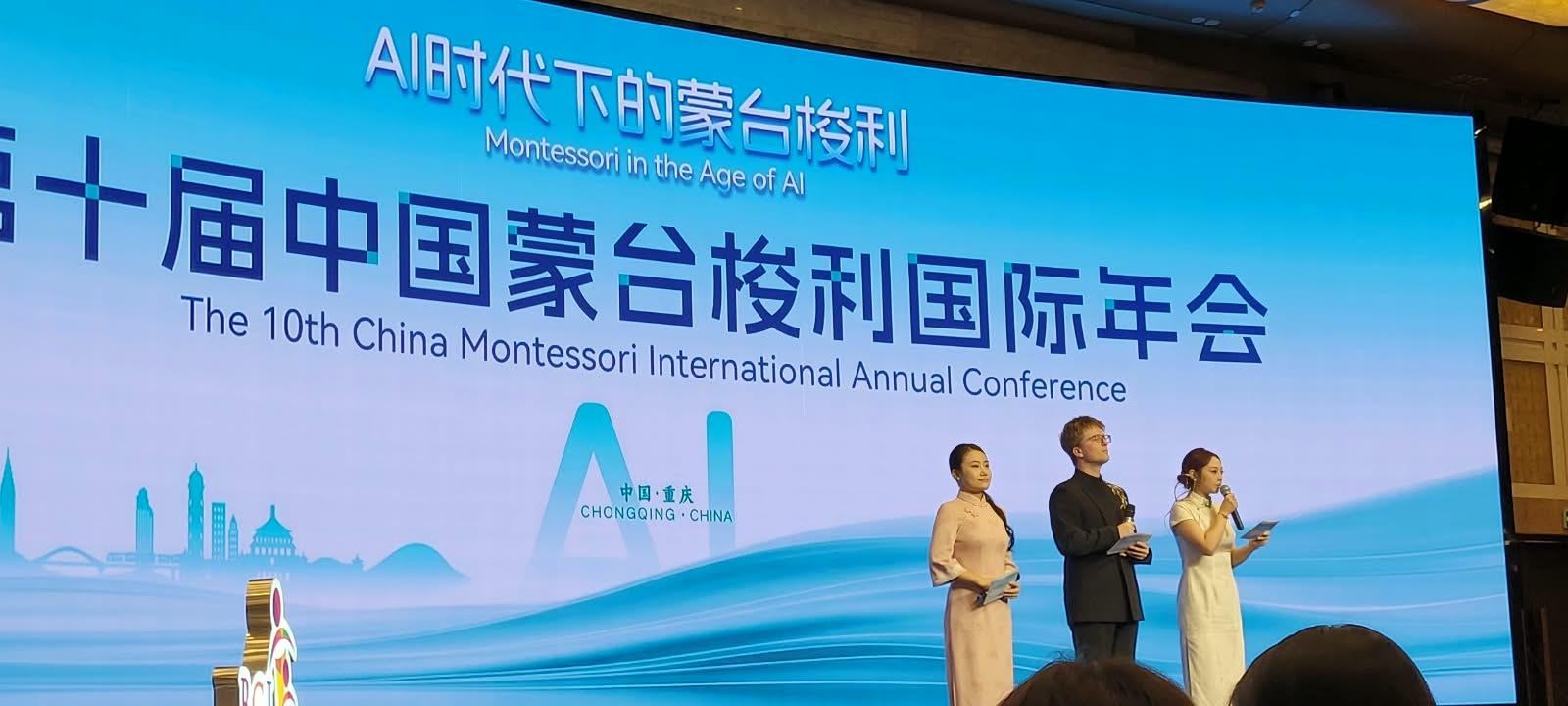
The conference hosts opening the programme.
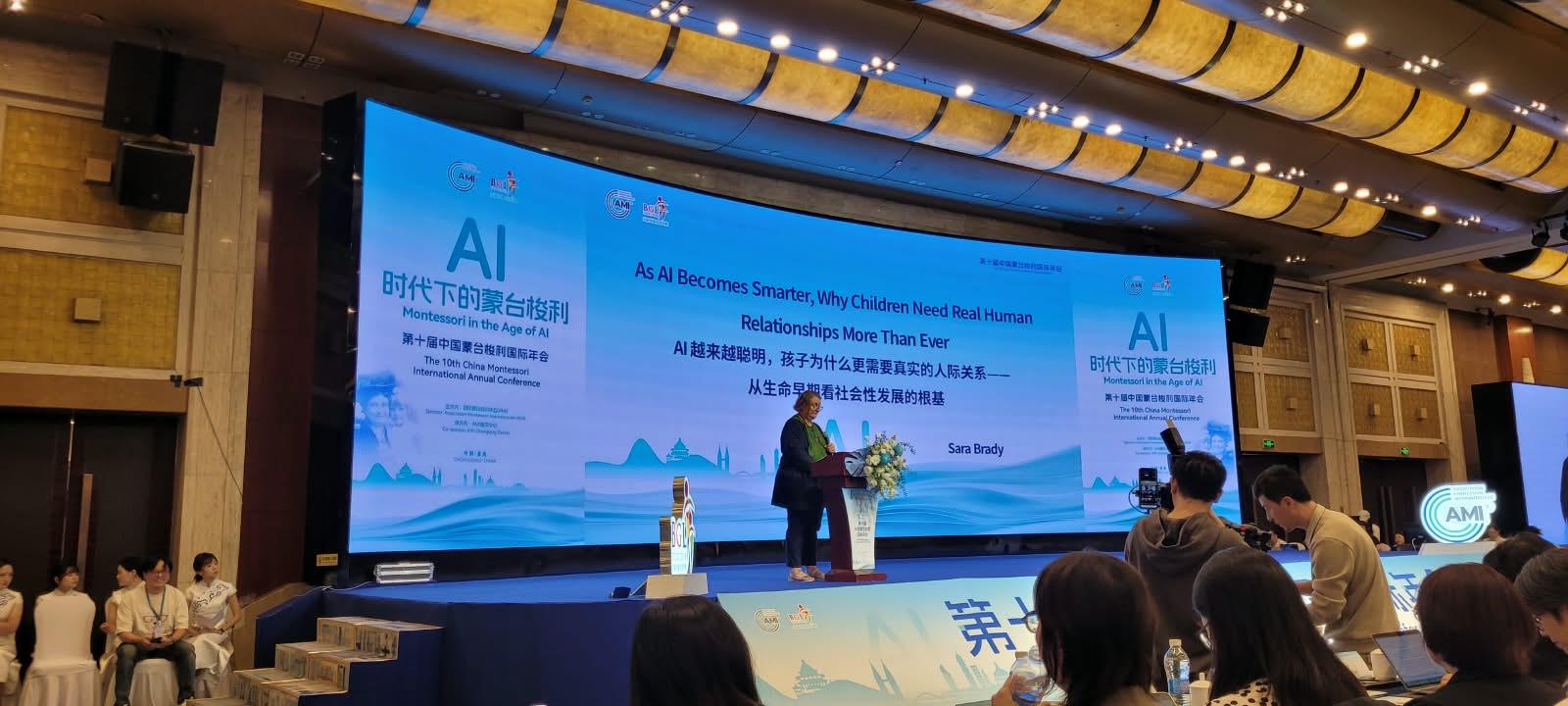
Sara Brady on why children need real human relationships as AI systems become more capable.

Written by
Elena Sinel
Elena Sinel is an award-winning AI keynote speaker, FRSA and founder of Teens in AI. She speaks on ethical AI, diversity in technology and AI education at conferences and corporate events worldwide. Learn more about Elena.